
Solar Farm Vegetation Control & Grounds Maintenance
Professional utility-scale solar O&M services for installations across Illinois, Indiana, Iowa, Missouri, Kentucky, Tennessee, Mississippi, and Arkansas.
40+ Years
Commercial Grounds Expertise
8 States
IL, IN, IA, MO, KY, TN, MS, AR Coverage
25+ Acres
Serving sites from 25 acres to utility-scale farms.
Request a Site Assessment
Solar Farm Vegetation Management: Illinois, Indiana, Iowa, Missouri, Kentucky, Tennessee, Mississippi & Arkansas.
Reinhart provides utility-scale solar farm vegetation control and grounds maintenance across a multi-state region. Our three Illinois facilities and mobile crews enable rapid response for solar farm maintenance throughout the Midwest. We understand that effective vegetation management is critical for maintaining panel efficiency, preventing shading, reducing fire risk, controlling pests, avoiding neighbor complaints, and protecting your long-term ROI.
Illinois Solar Farm Services
Primary Coverage: Central and Southern Illinois
Major Solar Markets

Bloomington-Normal region (McLean County)
Champaign-Urbana area (Champaign County)
Peoria County and surrounding areas
Springfield vicinity (Sangamon County)
Decatur area (Macon County)
Logan, DeWitt, Piatt, Vermilion Counties
Indiana Solar Farm Services
Primary Coverage: Western and Central Indiana
Major Solar Markets
Lafayette-West Lafayette (Tippecanoe County)
Terre Haute area (Vigo County)
Indianapolis region (Marion County)
Crawfordsville area (Montgomery County)
Hendricks, Boone, Clinton Counties
Iowa Solar Farm Services
Primary Coverage: Eastern Iowa
Major Solar Markets
Quad Cities region (Scott County)
Iowa City area (Johnson County)
Cedar Rapids vicinity (Linn County)
Muscatine County
Clinton, Jones, Cedar Counties
Missouri Solar Farm Services
Primary Coverage: Northeast Missouri
Major Solar Markets
Hannibal area (Marion County)
Columbia region (Boone County)
Moberly vicinity (Randolph County)
Kirksville area (Adair County)
Ralls, Pike, Audrain Counties
Solar Farm Vegetation Services

Perimeter & ROW Vegetation Management
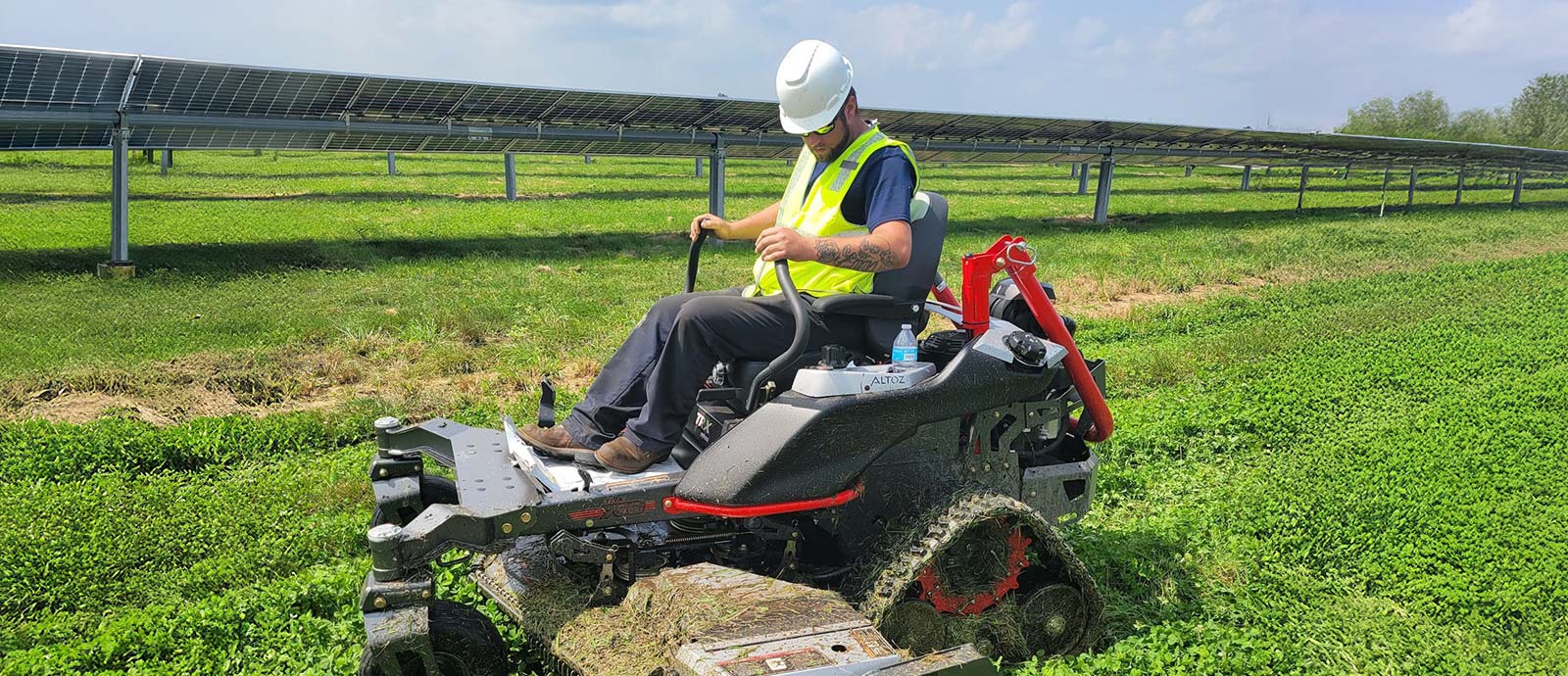
Control of invasive species, woody vegetation, and aggressive grasses along fence lines, rights-of-way, and property boundaries. Includes selective herbicide application and mechanical removal of brush, saplings, and invasive species that threaten panel efficiency.

Between-Row Vegetation Control
Strategic mowing and vegetation management between panel rows to prevent shading while maintaining soil stability and erosion control. Frequency adjusted based on precipitation and vegetation growth rates (typically 3 times per growing season). Height maintained below 16 inches to balance shading prevention with erosion protection.

Native Pollinator Habitat Management
Strategic planting and maintenance of native grasses and wildflower mix that reduce long-term mowing requirements by 40-60% while supporting biodiversity and local environmental initiatives. Low-maintenance alternative to traditional turf grass. May qualify for renewable energy credits and sustainability certifications.

Fire Prevention Vegetation Clearing
Creation and maintenance of defensible space (30-50 feet) around inverters, transformers, and high-risk electrical infrastructure to minimize fire risk. Regular inspection and removal of dead vegetation, leaf litter, and flammable materials. Critical for insurance compliance and risk management.

Winter Snow Management (Optional)
Snow removal from access roads, inverter pads, and maintenance areas to ensure year-round site accessibility. Critical for O&M crews needing emergency access during winter months. Coordinated with vegetation control for comprehensive site management.

Coming Soon
Autonomous Mowing Operations
Gen 4 autonomous mowing systems for cost-efficient vegetation control on large solar installations. Solar-powered units reduce fossil fuel dependence. Sub-centimeter GPS accuracy prevents panel contact. 24/7 operation capability during low-generation hours minimizes disruption.
Solar Farm Vegetation Control for Every Stage
For Solar Developers
Pre-Construction Site Preparation

Initial land clearing and grading coordination
Invasive species removal before panel installation
Erosion control during construction phase
Post-construction vegetation establishment
Long-Term O&M Partner: Transition seamlessly from construction to operations with a single contractor who knows your site from day one.
For Solar Asset Managers
Multi-Site Portfolio Management
Consistent vegetation control across IL, IN, IA, MO, KY, TN, MS, AR installations
Unified reporting and documentation for entire portfolio
Coordinated scheduling minimizes travel costs
Single point of contact for all sites
Performance Improvement: Replace underperforming contractors with documented service completion, GPS tracking, and proactive communication.
For Solar O&M Companies
Regional Subcontractor Partnership
Reliable vegetation management for Midwest clients
40+ years commercial grounds maintenance experience
Equipment and crews for 25+ acre sites up to the largest utility-scale solar farms
Autonomous mowing technology for cost efficiency
White-Label Available: We work under your client relationship while maintaining your service standards and reporting requirements.
Operational Risks of Poor Vegetation Management in Solar Fields
Energy Production Loss
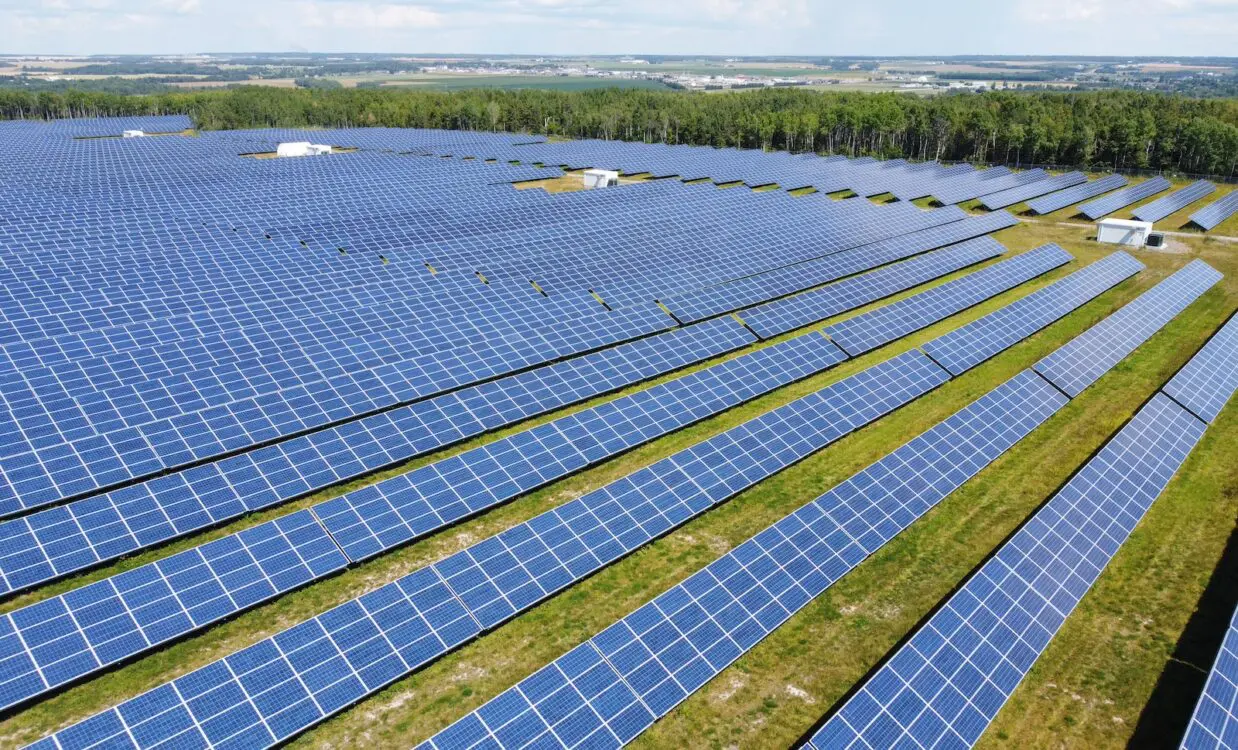
Overgrown vegetation can cast shadows on panels, especially Bi-facial panels, significantly reducing energy production by as much as 10%–30%.
Municipal Complaints - Compliance & Safety
Local governments prioritize public safety and adherence to land-use codes.
Ordinance Adherence: Many municipalities have strict height limits for vegetation (e.g., a "16-inch rule") to prevent a site from becoming a "nuisance" or "blight".
Permit Compliance: Regular mowing ensures the site meets "good neighbor" standards often required to maintain long-term operating permits.
Water Management: Keeping vegetation at an ideal height supports healthy root systems that reduce soil erosion
Fire Risk Mitigation: Tall, dry grass acts as fuel for fires that can damage electrical infrastructure or spread to adjacent properties.
Operational Safety and Efficiency
Safer Operations: Maintaining grass at an optimal height allows crews to operate equipment without risking contact with panel wiring, mounts, or other infrastructure.
Improved Equipment Performance: Shorter, controlled vegetation reduces strain on mowing equipment and allows machines to operate more efficiently.
Lower Long-Term Maintenance Burden: Regular mowing prevents vegetation from becoming dense and difficult to cut, keeping maintenance consistent and predictable.
Comparable Operational Costs: In many cases, completing three routine mowings per season requires similar time, fuel, and equipment wear as two mowings through overgrown vegetation, making proactive maintenance the more efficient approach.
Dangerous Pests
Ticks prefer shady, humid, and overgrown areas. When grass reaches certain heights, ticks perform "questing" by climbing to the top of tall grass blades to latch onto passing humans or animals.
Tall grass creates a perfect habitat for black-legged ticks, which can transmit Lyme disease to maintenance workers.
Neighbor/Landowner Complaints
Neighbors/Landowner are most concerned with the visual impact and biological "spillover" from the farm. Especially Aesthetics & Nuisance
Visual Appeal: Overgrown weeds present a "negative image to the public," making a clean energy project look like an abandoned industrial lot.
Invasive Species: Regular mowing prevents noxious weeds (like Russian thistle) from going to seed and infesting neighboring farmland.
Why Solar Operators Trust Reinhart

Jonathan has tons of knowledge and experience and goes above and beyond.
Shelly
Commercial Client
If you want the job done right, talk to Chad or Todd. They won't let you down!
Chad
Commercial Client

Same-day Response
to inquiries (submitted by 3pm)

Transparent Pricing
no hidden fees, no surprises

Safety-first Culture
solar-specific training for every crew

Satisfaction Guarantee
our mistakes are fixed at our expense
What Happens Next
1
We Respond Fast
We review of the details you provide. Receive a follow-up from real people who know your site needs.
2
We Visit Your Site
Free on-site assessment with detailed documentation. No pressure. Just professional analysis.
3
You Get a Custom Plan
Tailored maintenance schedule with transparent pricing. Clear service specs.
4
Work Begins When You Say
Professional crews. Branded equipment. High-visibility uniforms. You always know who's on your property.
5
We Prove Our Work
Monthly reports. Continuous quality audits. Account managers who actually answer their phones.
Common Questions


How often do solar farms need maintenance?
Most sites require vegetation management approximately 3 times during the growing season.
What if we have multiple sites across states?
We specialize in multi-site portfolios. One account manager coordinates service across all your IL, IN, IA, MO, KY, TN, MS, and AR facilities.
Do you work with solar operators or just direct owners?
Both. We partner with solar developers, asset managers, property owners, and operations teams.
What makes you different from regular landscapers?
40 years maintaining mission-critical commercial properties. We understand that your solar farm isn't a lawn, it's infrastructure that can't fail.
Protect Your Solar Investment with Professional Vegetation Control
Serving 25 acre to utility-scale solar installations across Illinois, Indiana, Iowa, Missouri, Kentucky, Tennessee, Mississippi, and Arkansas.
